
Saudi Arabia healthcare distribution: the distributor you appoint often holds your SFDA registration.
Only a wholly Saudi-owned company can act as your distributor, and for medical devices it usually doubles as the authorised representative behind every SFDA marketing authorisation. With most healthcare spend flowing through NUPCO and the health clusters, the appointment decides both your licence and your channel.
Why healthcare distribution in Saudi Arabia is different.
A foreign device manufacturer cannot hold an SFDA Medical Device Establishment Licence. It appoints a Saudi authorised representative, and every Medical Device Marketing Authorisation is tied to that licence. Pharmaceutical files carry a local agent in the same way. Add the Commercial Agencies Law, which reserves the distributor role for Saudi nationals and wholly Saudi-owned companies and records the agency at the Ministry of Commerce, and the first appointment becomes a regulatory decision as much as a commercial one.
The state buys through one door, and the door is movingGovernment accounts for more than 60% of healthcare spending. NUPCO runs unified procurement for public hospitals and primary care, and only companies registered with NUPCO and holding SFDA registration for the product can bid. The Ministry of Health's hospitals are now being transferred into health clusters under the Health Holding Company, specialist and military health systems still run their own tenders, and local content rules add a price preference for Saudi-made products. A distributor's tender record from five years ago says little about its access today.
Cold chain is tested on the road, not in RiyadhMost licensed cold storage sits in the Riyadh, Jeddah and Dammam triangle. Hospitals in Jazan, Najran, Tabuk and Al Jouf sit a day's drive away, through summer heat above 45°C, and Makkah and Madinah absorb demand surges every Hajj and Umrah season. Every pharmaceutical pack must also be scanned into the SFDA's RSD track and trace system at each movement, so a distributor's systems matter as much as its refrigeration.
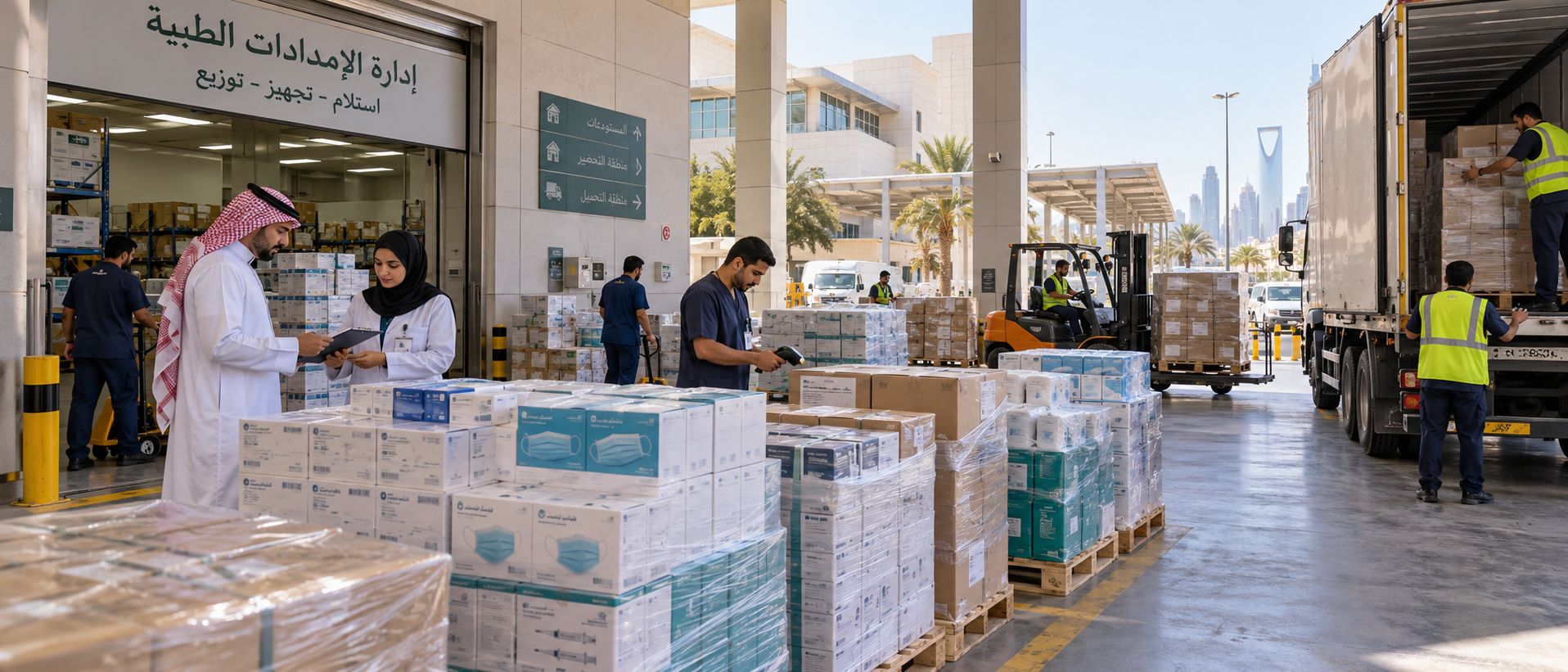
What a qualified healthcare distributor in Saudi Arabia actually holds.
An SFDA establishment licence matched to your product class: a drug establishment and warehouse licence for pharmaceuticals, or an MDEL for devices and IVDs, which importers and distributors renew every year. For devices, check whether it holds a separate authorised representative licence for each manufacturer it represents. Confirm wholly Saudi ownership, an entry in the Ministry of Commerce Commercial Agencies Register, and live integration with RSD.

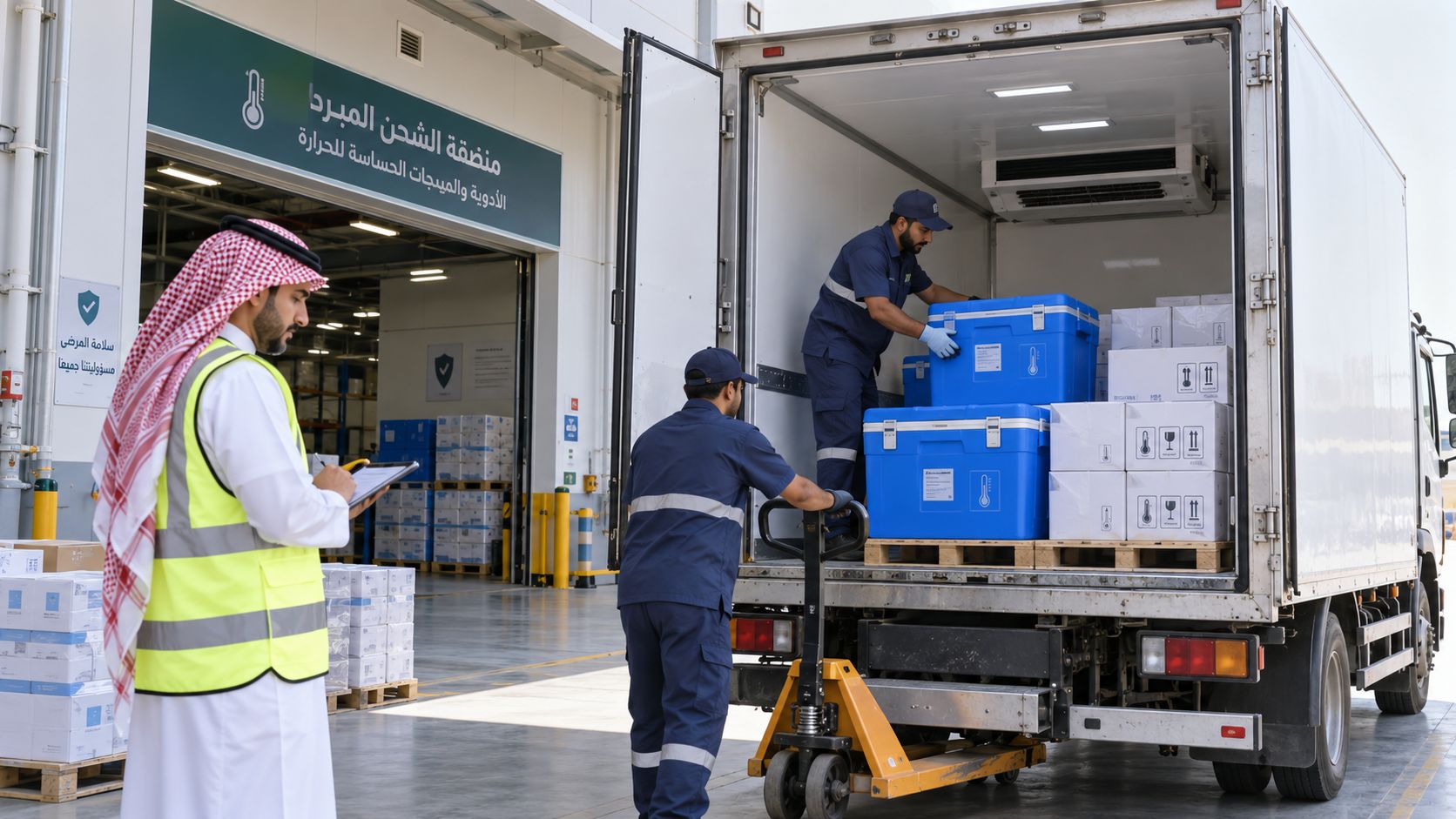
Storage that meets SFDA good distribution practice guidance, with temperature mapping that covers a Saudi summer rather than a spring validation. Ask how chilled product reaches the southern and northern regions: own regional depots, a qualified third-party carrier, or overnight reefer runs from Riyadh. The gap between certified and claimed usually opens on the last leg into outlying hospitals.
Name the channel your product needs: NUPCO framework supply, the health clusters, specialist hospitals, military and National Guard health services, private hospital groups, or retail pharmacy chains filling Wasfaty prescriptions. Each needs different evidence. For government, ask for supplier registration and award history; for private hospitals and pharmacies, ask for formulary listings and the accounts served directly rather than through a wholesaler.
For devices and capital equipment, count the biomedical engineers and their Saudi Commission for Health Specialties classification, and check where they are based. A service team concentrated in Riyadh cannot meet uptime commitments in the Eastern Province or the south. Ask for spare-parts holdings, factory training certificates and the response times written into current hospital service contracts.
Established Saudi distributors carry several multinational lines, and competing therapy areas or device ranges are rarely volunteered. Ask for the full principal list and search the Commercial Agencies Register for agencies held. Exclusivity in Saudi agreements is often written at portfolio level, so define it by sub-sector, therapeutic area and region before signing.
Government tenders require bank guarantees and stock carried against long public-sector payment cycles, and capital equipment adds installation costs ahead of payment. Review audited accounts, guarantee capacity and receivables owed by government buyers. Saudisation compliance belongs here too: a pharmacy workforce below the required rates puts licences and visas at risk.
Where healthcare distributor appointments in Saudi Arabia go wrong.
Foreign device manufacturers cannot hold an SFDA establishment licence themselves; they appoint a Saudi authorised representative, and many principals let the distributor take that role to save time. When the relationship fails, every marketing authorisation sits behind an entity with no incentive to cooperate, and the market stops while the file is moved. Check whose licence number appears on each MDMA, and require a separate authorised representative or a signed transfer undertaking before the first shipment.
A GDP-compliant cold room in Riyadh says nothing about the 1,000-kilometre haul to Jazan or Tabuk in August, when ambient temperatures pass 45°C and vehicles wait at hospital receiving bays. Distributors often subcontract outlying regions to carriers with uncalibrated reefer units. Ask for summer lane validation and data-logger records for your three most remote delivery points, not the warehouse certificate.
Agency and distribution agreements are recorded in the Ministry of Commerce Commercial Agencies Register, and removing an entry after termination can require the outgoing distributor's cooperation. Kingdom-wide exclusivity granted to a distributor strong in one region therefore locks out the rest of the market with no quick remedy. Define exclusivity by sub-sector, channel and region, and write registration handover duties into the contract itself.
Most Saudi distributors list NUPCO, the health clusters and the specialist hospitals as customers, yet a single historical award or a sub-supply arrangement through another tenderer is presented as direct access. Because government channels carry most healthcare spend, this is the claim that matters most and the one least often tested. Request the supplier registration, the framework agreement references and the award history for your product category over the last three cycles.
Distributors built around government tenders run bid teams, bank guarantees and bulk deliveries to cluster warehouses. A consumer-facing pharmaceutical needs pharmacy chain listings, detailing reps and Wasfaty-linked replenishment, which a tender house rarely has. Ask for the revenue split between government, private hospital and retail pharmacy, and the number of pharmacy chain accounts served directly.
Healthcare sub-sectors covered in Saudi Arabia.
Branded medicines split between NUPCO tenders and private pharmacy chains, with RSD serialisation at every movement and local content preferences now reaching selected molecules. Few distributors are strong in both channels.
Critical: drug warehouse licence, RSD integration, NUPCO award history, pharmacy chain listings
The authorised representative question decides control of every MDMA, and hospital buyers expect installation and service from local engineers. Capital equipment tenders reward distributors with service centres outside Riyadh.
Critical: MDEL, authorised representative structure, biomedical engineer headcount, regional service coverage
Software as a medical device needs SFDA authorisation, and health data carries Saudi residency and cybersecurity obligations. Distributors here need integration teams that work with hospital IT and the health clusters, not just sales coverage.
Critical: SFDA software classification, data residency compliance, hospital IT integration, cluster relationships
IVDs fall under the SFDA device framework, and reagent-rental models tie analyser placement to years of consumable supply. Government laboratories, private laboratory chains and hospital labs each buy differently.
Critical: MDEL, reagent cold chain, application specialists, laboratory channel mapping
High-volume, price-led supply where NUPCO frameworks and Saudi-made competitors set the terms, and local content preference narrows margins on imported lines. Logistics depth and stock-holding matter more than detailing.
Critical: NUPCO framework status, regional warehousing, stock-holding finance, local content position
Demand concentrates in a small number of specialist and tertiary centres, often through named-patient or special supply routes. Distributors need medical science staff, ultra-cold handling and relationships with treating physicians rather than volume coverage.
Critical: specialist centre access, ultra-cold capability, medical affairs staff, special import handling
How DistributorIQ finds healthcare distributors in Saudi Arabia.
We start from your product and channel, then work outward to the distributors that can genuinely serve them. For Saudi healthcare, every profile covers the regulatory stack, cold chain lane evidence, field engineering capacity, channel access by buyer type and portfolio conflicts, each verified rather than self-reported.
Research runs in Arabic and English. We check SFDA licence status and authorised representative structures, Ministry of Commerce commercial registration and agency records, and NUPCO award history for your category. We confirm Saudisation standing, regional warehouse locations and the share of revenue coming from government, private hospital and pharmacy channels, and we speak to the distributors and their customers before anything reaches a shortlist.
Saudi Arabia healthcare is one of the markets we have already researched in depth, so most engagements start from verified profiles rather than a blank page. You receive a ranked shortlist with the evidence behind each position, and ranking is never for sale.

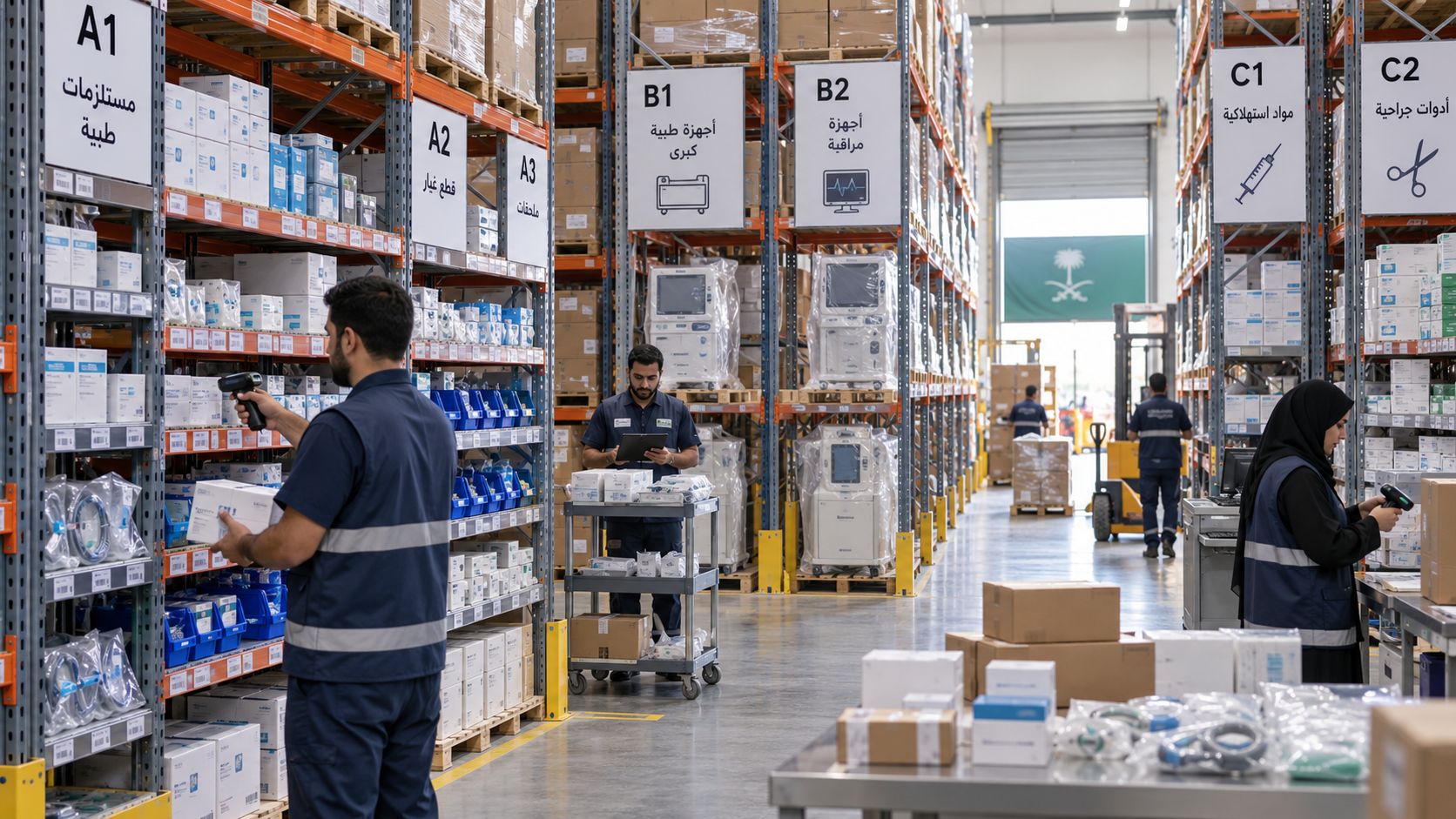
We research, verify, and present the healthcare distributors that match your product category, target geography, and commercial requirements in Saudi Arabia. Tell us what you need.
Tell us your requirementThe same research process operates across 40+ countries and all four sectors. Any sub-sector. Scoped and priced before fieldwork begins.
Tell us about your Saudi Arabia healthcare distribution requirement.
We respond to every enquiry with a scoped outline of what we can cover for your product and channel in Saudi Arabia, before any commitment.
Confidential by default. We don't share enquiry details with distributors or third parties.